Stop Apologizing for Being Human
Apologies are important. They matter when we’ve crossed a boundary or caused harm. But many of the apologies we offer each day aren’t about accountability, they’ve morphed into being about discomfort.
Discomfort for what others will think. As if needing space or showing our emotions make us seem weak and undesirable.
So many of us learned to soften our presence with apologies. Not because we’ve done something wrong, but because we exist with depth, feeling, and limits.
Shift your mindset
You don’t have to stop saying sorry completely. You just have to notice the habit first.
Instead of shrinking yourself with an apology, try meeting the moment with gratitude. Replacing just a few words will shift your entire mindset.
Gratitude recognizes shared space instead of personal failure.
It says: I see you here with me. And I trust this moment instead of apologizing for it.
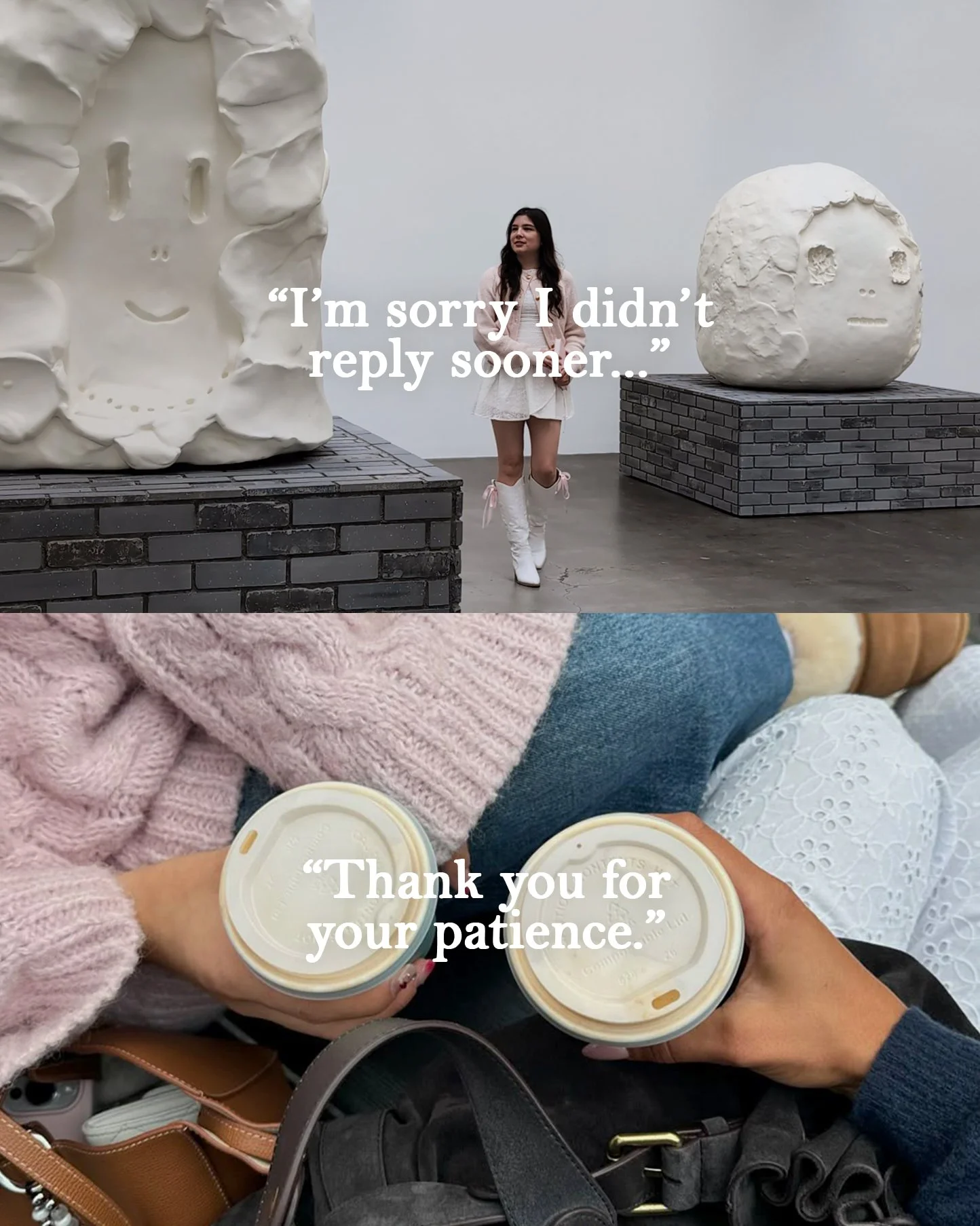
Change is slow, but soon you notice a personal shift. You stop bracing for rejection or assuming your needs are inconvenient. Allowing yourself to exist as you are suddenly becomes empowering and genuine.
Go At yOUR OWN PACE
There is a quiet pressure to keep up. To reply quickly, to move efficiently, to process emotions neatly, to heal on a timeline that makes other people comfortable.
When we can’t meet that pace, we often apologize. Not because we’ve done something wrong, but because we’ve learned to treat slowness as a flaw.
There is nothing wrong with:
Taking time to respond
Feeling deeply
Needing rest
Sharing your truth
Being held by others


These moments don’t require an apology. They are not interruptions or inconveniences. And they are not something to explain away or justify.
They are evidence of a life being lived. A life that honors feeling, rest, connection, and presence.
A Practice You Can Try This Week
The next time you catch yourself about to say “sorry,” pause and ask: Is this an apology or a habit?
If no harm was done, try replacing it with gratitude instead. Here are some examples of reframing your mindset:
“I’m sorry I need help.”
→ “Thank you for being someone I can lean on.”
“I’m sorry I’m not done with this yet.”
→ “Thank you for being patient.”
“Sorry I’m just so awkward.”
→ “Thank you for accepting me as I am.”
Moving at your own pace doesn’t mean you’re falling behind. It means you’re listening.
Each time you choose presence over pressure, gratitude over guilt, you’re practicing a quieter kind of self-trust. You don’t have to explain your timing, soften your feelings, or apologize for needing care.
*I can only speak from my own mental health journey, everyone copes differently. However, I’ve found it most helpful to stay consistent in recognizing my own needs. I’ve written several other posts with some helpful tips for alleviating your struggles.
MORE MENTAL HEALTH ARTICLES:
Feeling Lazy or Just Unmotivated?